A Reporter's Lessons from Past Shootings
Qualify witnesses carefully. Don't jump to conclusions about a suspect's character or motive. Treat survivors humanely. Excise the word "snapped" from your vocabulary.
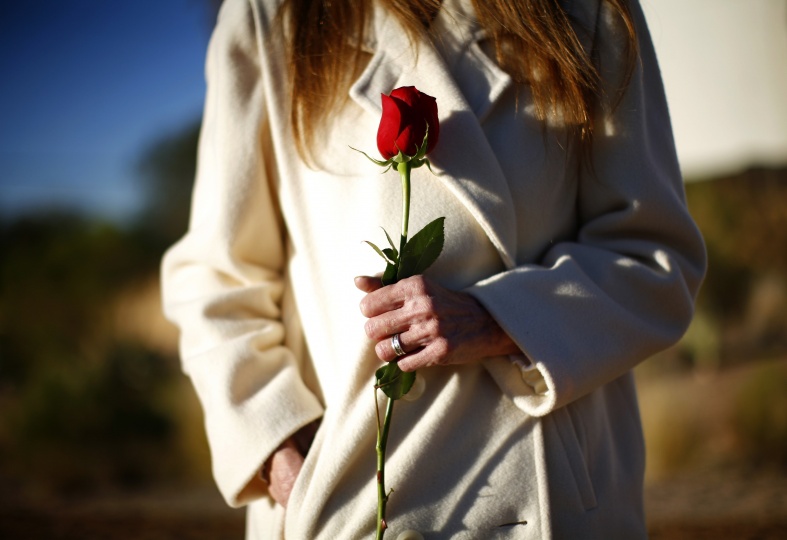
A mourner at Christina Taylor Green's funeral carries a single red rose.
Editor's Note: Dave Cullen spent a decade researching and writing Columbine, his best-selling account of the 1999 school shooting in Littleton, Colorado. Cullen had covered the Columbine shootings as breaking news, but in writing his book became aware of just how much he and other reporters got wrong. He has also compiled advice for journalists on interviewing and created a free online Instructor Guide for Columbine.
Following the shooting of Congresswoman Gabrielle Giffords and 18 others in Tucson on January 8, 2010, Cullen shared what he has learned about covering high-profile mass shootings.
Qualify witnesses carefully. How well did they know the gunman? How recently? You may have to press them or feel them out on how they can substantiate their level of interaction.
- After the shooting of Congresswoman Gabrielle Giffords, news organizations quoted people who attended the same high school as accused shooter Jared Lee Loughner four years ago, and were not even identified as old friends. Such testimony is of doubtful relevance. Mental illness often first manifests in late adolescence, so a year or two can make a dramatic difference. And, of course, teenagers change.
- At Fort Hood on Nov. 5, 2009, U.S. Army Major Nidal Malik Hassan was widely reported to have called out an Islamic prayer before he opened fire on fellow soldiers, killing 13 and wounding 30. But did any of the witnesses speak Arabic? Was their translation reliable?
Beware of witnesses drawing conclusions. Rely on witnesses to tell us what happened, but never why. Many will try to interpret the gunman’s actions — eg., “He shot him because he was black” — but that is generally speculation.
Be on guard against the false profile of a shooter as inevitably a loner and outcast. This is a myth. There is no generic profile – yet our assumption that there must be a profile colors reporting. People who knew the shooter peripherally will often home in on the presumed “right answer” and offer these traits. As reporters, our own ears are prone to pick up on them and begin looking in that direction, too. Once we get to the point of asking, “Was he a loner?” the outcome of our story is often sealed.
Be wary of witnesses repeating any narrative that has already gained traction in the media. Even solid, reliable witnesses will start incorporating news they have heard into their accounts. It’s not hard to extricate their hearsay from their direct knowledge, but you have to ask every time: How do they know this?
Help police spread the word on potential accomplices, and distribute photos and descriptions. But don’t assume the person is actually connected. Most leads turn up empty.
Constantly guard against reaching rapid conclusions, especially about the gunman’s character and motives. This is extremely hard to avoid, and we all can fall into this trap. It is so frustrating to wonder why, why, why; and when we start getting information, we fit it into a picture. But step back: out of zillions of tiny fragments of information about this person or event, what do we have – ten or twenty factoids? In fact, 99.9% of the picture is still missing. We’re deluding ourselves if we think that we can piece it together accurately from tiny scraps.
Even when we get seemingly conclusive evidence, is it really conclusive? Do the killer’s journal or videos tell us exactly why he did it? When did he record it? Did he change his mind the next day? Even if he said something convincingly, was he just testing out an idea while deeply divided inside? Was he grandstanding, or trying to get a rise out of someone? If psychosis or depression are a factor, those conditions can change radically from day to day.
- After the Columbine shootings, the sheriff revealed that Eric Harris’s journal described a plan to escape after the attack, and fly planes into buildings in New York City. That was true. But it was also written long before the attack, when Eric was just toying with ideas. He never wrote about it again. It was possibly no more than a passing thought, and clearly discarded long before the attack.
When evidence from the best possible source — the killer himself — is often worthless, consider how strong the secondary data really is. Don’t assume you know the truth about past shootings. Don’t wing it. Look them up.
Excise the word “snapped” (as in, "that was when the killer snapped") from your vocabulary. “Snapped” perpetuates the mistaken notion that people go off suddenly. The vast majority of shooters plan their attacks in advance. It is usually a slow, gradual evolution toward murder, without a single cause.
Avoid premature blame. Most shooters outsmart the system. Let go of the “someone should have known” assumption unless/until facts specific to this case bear it out.
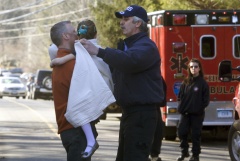
Treat survivors humanely. A good rule is to be ready to treat them the way you would treat a friend. Most of them want to talk, so it’s fine to ask questions about the tragedy. Just be aware they may break down unexpectedly at any time. Their own descriptions can take them by surprise. When survivors have a bad reaction, give them a moment. Quit asking questions. Step out of the interview and react like a good Samaritan or a friend. They will usually compose themselves quickly and be ready to move on. Just give them a minute.