KIA in the Age of Facebook
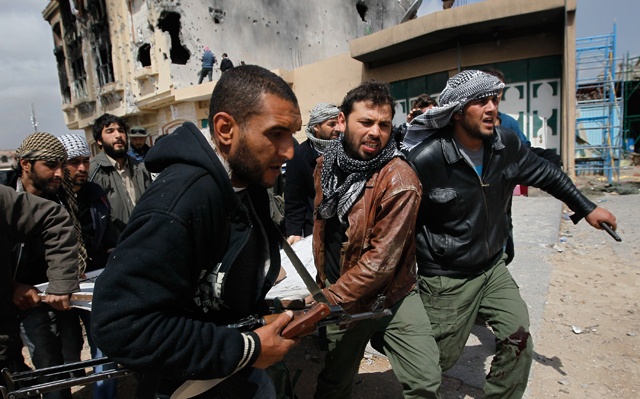
No ground rules protected Tim Hetherington and Chris Hondros as they covered the conflict in the rebel-held Libyan city of Misrata. News of their deaths sped across a social network of professional communicators, stunned at the loss of two treasured colleagues.
Editor’s note: The first half of this reflection on the deaths of photojournalists Chris Hondros and Tim Hetherington originally appeared as a blog post on Idea Shift Media Lab.
When she picked up the phone, I could tell from the sound of her voice that she didn't know yet.
"I'm sorry to tell you this — but I wanted you to hear from a friend, not Facebook. Tim Hetherington was killed in Libya. Chris Hondros too. I'm really sorry."
There's a nauseating absurdity to those words, but it's the conversation I had yesterday morning with a friend.
I'd been getting "pings" for an hour, mostly by Facebook IM, asking if I knew anything about the tweets coming out of Libya. I wasn't taking them especially seriously at first, having spent most of the last decade in the swashbuckling photojournalist's world of close calls, near-misses, slight embellishments, and wild exaggerations. In this very foggy realm of war and disaster, epic tales abound — of firefights, explosions, abductions and the like — but today's hype turned out to be real.
CONTACTING NEXT OF KIN
As I began reading the SMS messages on my mobile, the phone rang. A friend in a newsroom, choking out words through tears that Tim was dead. Chris badly wounded. Another friend unaccounted for. Attempts were being made to reach Tim's girlfriend. Chris had just gotten engaged, and it was unknown if his fiancée had been contacted yet. No idea about their families.
By the time I got off the phone with her, and turned back to my laptop, conversation threads were spilling across Twitter feeds and Facebook walls. Prayers, questions, doubts, and speculation were spreading at digital speed.
I've been an embedded photographer, inserted with soldiers or Marines in places like Iraq and Afghanistan. I've often signed a contract known as the Embedded Media Ground Rules — one of the most basic terms of the contract is that news of casualties is withheld, until such time as the next of kin have received official notice.
When troops are killed, that process of notification means real, live, human messengers are dispatched to the doorsteps of mothers and wives — sometimes in a complex maneuver where multiple family members, spread out across different and distant locations must receive a coordinated, simultaneous knock on their doors.
In the forward "area of operation" controlled by the military, a communication blackout is usually imposed, with Internet and phone service, if they even exist, shut down until the next of kin have been contacted. It's one of the conditions that few journalists object to - most of us agree that no mother should have to learn of her son's death in the pages of a newspaper.
In the Facebook and Twitter age, the time delay of the print news cycle seems positively quaint. I thought about that as I watched real-time updates stream across my monitor and mobile screens — and I wondered if Tim and Chris had family and close friends who hadn't even woken up yet in whatever time zone they were in.
NEWS SPREADS ON THE SOCIAL NETWORK
For Tim and Chris, there weren't any media ground rules, and in rebel controlled territory in Libya, there was no Internet blackout. News of their deaths was transmitted across a personal social network that happened to be composed of professional communicators. The information wasn't delivered by broadcast dumb-bombs — it moved like laser-guided munitions, tracking and hunting through a guidance system of "friends," "likes," and "shares," steadily closing in on its targets with a speed and precision that conventional media couldn't dream of.
By midday, I'd learned that two other photographers had been wounded in the same incident. One of them was my friend Mike Brown, the other was a British photographer named Guy Martin who I've never met. The good news, at least, was that Mike had taken shrapnel to the shoulder, but was non-critical. The missing photographer, my friend Moises Saman, had made contact, and was safe, already in another country.
Conflicting reports kept coming about Chris — some said he's dead, others indicated that he suffered catastrophic head injuries but was clinging to life. There have been some angry comments about another photographer who first broke the news via Twitter or Facebook, and others of gratitude to him for assistance during the aftermath of the attack, as the wounded photographers received medical treatment.
Personally, I doubt that Tim and Chris probably would begrudge anyone for tweeting their deaths. In an information age, they lived and died by the sword, but it still feels kind of twisted.
As always, we are navigating unstable, and unknown territory, in the way we communicate.
THE IMPACT OF LOSS
I last saw Tim Hetherington exactly a month ago in Brooklyn, the night before he left for Libya. I can’t remember the last time I saw Chris Hondros: It might have been years ago, probably in Baghdad. As I search for the right word to describe our relationship, I can’t honestly call it friendship. The closest concept that comes to mind is “andiwal,” a Persian word that translates roughly as “bonds of war.” We were part of a network of professional war tourists, and we sometimes crossed paths in the distant, messed up places that rational people avoid. I can barely remember their photographs, even as I struggle to rationalize their deaths, or justify the risks they took to make them.
To the extent I knew either of them, the two men seemed like diametric opposites in their approach. Chris was a staff photographer for one of the world’s largest news agencies, and he deployed to Libya with the same workman’s professionalism as he had in countless other conflicts. His work was an endless series of “rotations,” in the hot spot of the moment, and he did his job without the swagger or narcissism that’s common in the ranks of “war photographers.” Perhaps the best testament I can offer came from Ali, an Iraqi civilian who drove a car for me, and subsequently for Chris. There’s no better character witness than the man who shares the road with you, and observes you through every waking moment. “He is a good man,” Ali had once told me, “A very good man.”
Tim was a freelancer, who couldn’t even be accurately called a “photographer,” because he did so many other things, and did them all so successfully that none could be considered a defining aspect. At the time he was killed, he wasn’t even on assignment — he just picked up and went, without a paycheck or a safety net. On the night of his death, a distraught friend and colleague shook her head and wondered why he’d risked his life for photographs that might not even be published.
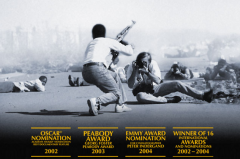
Maybe Tim had already answered that question with his last project, an independent documentary film called Restrepo, which seems to have emerged as the defining account of the Afghanistan war. Restrepo pushed so far past the reach of the printed page that Tim might be forgiven for believing that he could make an impact, armed only with his own resourcefulness.
They are both missed, and the impact of their loss is only beginning to be felt.